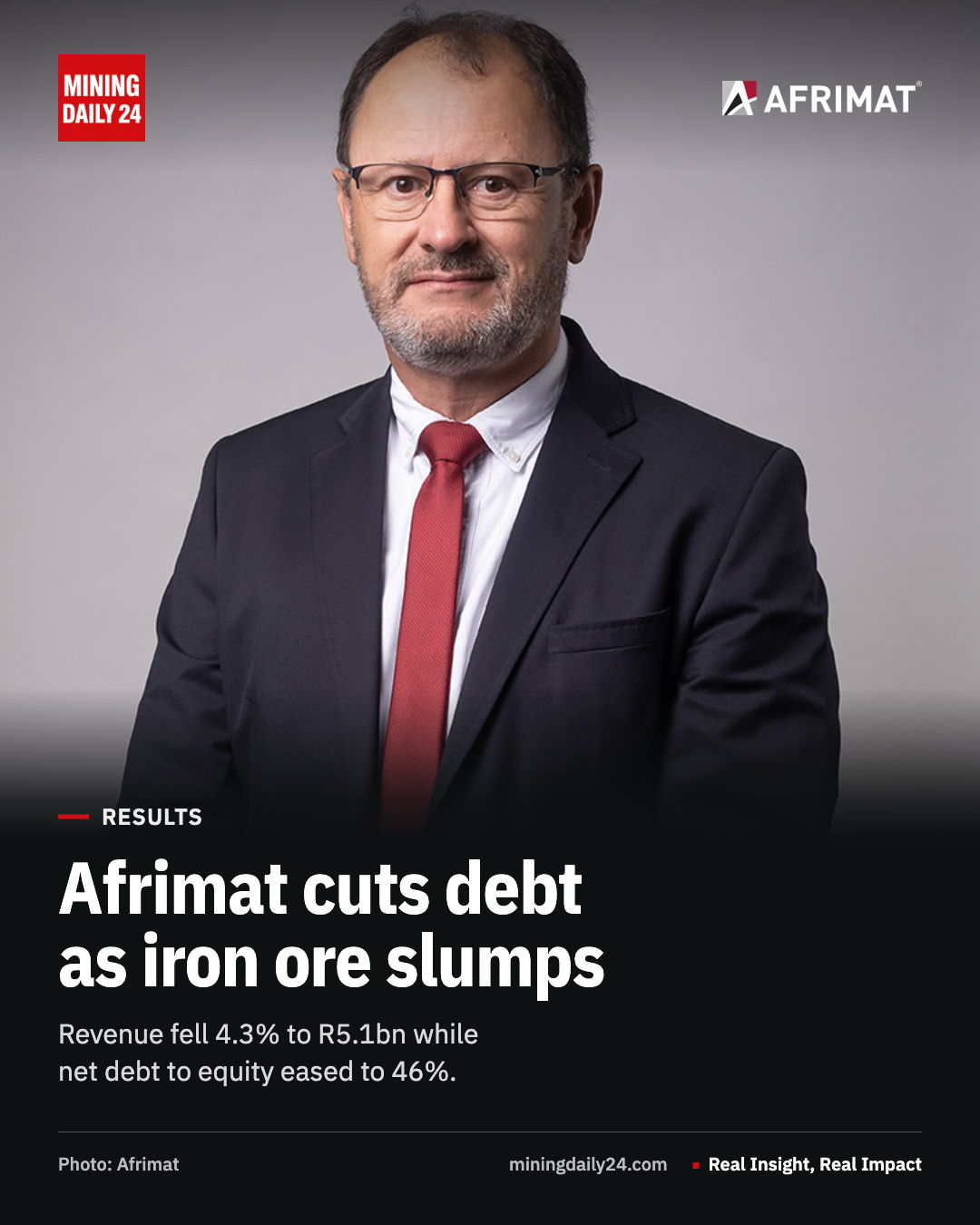
JSE-listed mid-tier miner Afrimat swung to a headline loss in the six months to 31 August 2026 as its iron ore business came under heavy pressure, but the group cut debt and lifted cash generation, it said in its interim results on 22 October.
Group CEO Andries van Heerden said an "exceptional combination of pressures" had produced the toughest trading conditions Afrimat has faced since listing in 2006.
The numbers
"An exceptional combination of pressures caused the most challenging trading conditions that Afrimat has ever faced since it listed in 2006." – Andries van Heerden, CEO, Afrimat
Revenue fell 4.3% to R5.1 billion, while operating profit dropped 32.8% to R255.2 million. That figure includes a once-off R95.5 million profit on the sale of divested operations. Afrimat reported a headline loss of 58.0c a share, against headline earnings of 101.9c a year earlier, and the board declared no interim dividend.
Cash generated from operations rose 21.1% to R433.1 million, which Van Heerden put down to disciplined working capital management. Disposal proceeds of R158.0 million went to repaying borrowings, and net debt to equity improved to 46.0% from 50.2% in February. Afrimat said all bank covenants remain within lenders' limits.
Iron ore under pressure
The bulk commodities segment drove most of the decline, with operating profit collapsing to R8.6 million from R445.1 million. Iron ore and manganese operating profit fell to R11.3 million from R403.5 million as the Demaneng mine reached the end of its life.
Domestic iron ore sales fell 36.5% to 527,696 tonnes, while exports rose 29.9% to 514,809 tonnes. Afrimat said shipping costs rose 49.1% because of disruptions linked to the Iran conflict, and that a stronger rand cut mine-gate revenue per tonne by 16.4%. The newly acquired Doornfontein deposit will replace Demaneng, with first ore expected in the last quarter of the 2027 financial year.
Manganese volumes climbed to 240,433 tonnes after Afrimat secured a seven-year allocation of 240,000 tonnes a year through the Coega Manganese Export Terminal near Gqeberha.
Aggregates carry the group
The aggregates and fly-ash business was the bright spot. Revenue rose 5.3% to R2.0 billion and operating profit jumped 76.8% to R567.8 million, lifting the margin to 27.8% from 16.6%. Van Heerden credited efficiency gains at the former Lafarge quarries, higher-margin products and ballast and boulder sales, including flood repair work in the Western Cape.
Cement remained loss-making, with an operating loss of R146.1 million, although Kiln 3 returned to service on 1 September. Afrimat said its review of strategic alternatives for cement continues.
At Nkomati Anthracite, revenue rose 9.2% to R543.0 million on higher exports after South Africa's ferrochrome smelters shut temporarily. Afrimat said the smelters are now starting up again.
Why it matters
Afrimat's results show how a weaker domestic steel and ferrochrome market, high freight costs and a strong rand are squeezing South Africa's mid-tier miners, even as infrastructure and rail maintenance demand lifts the construction materials side.
Source: Afrimat interim results press release, 22 October 2026; also reported by Mining Weekly.