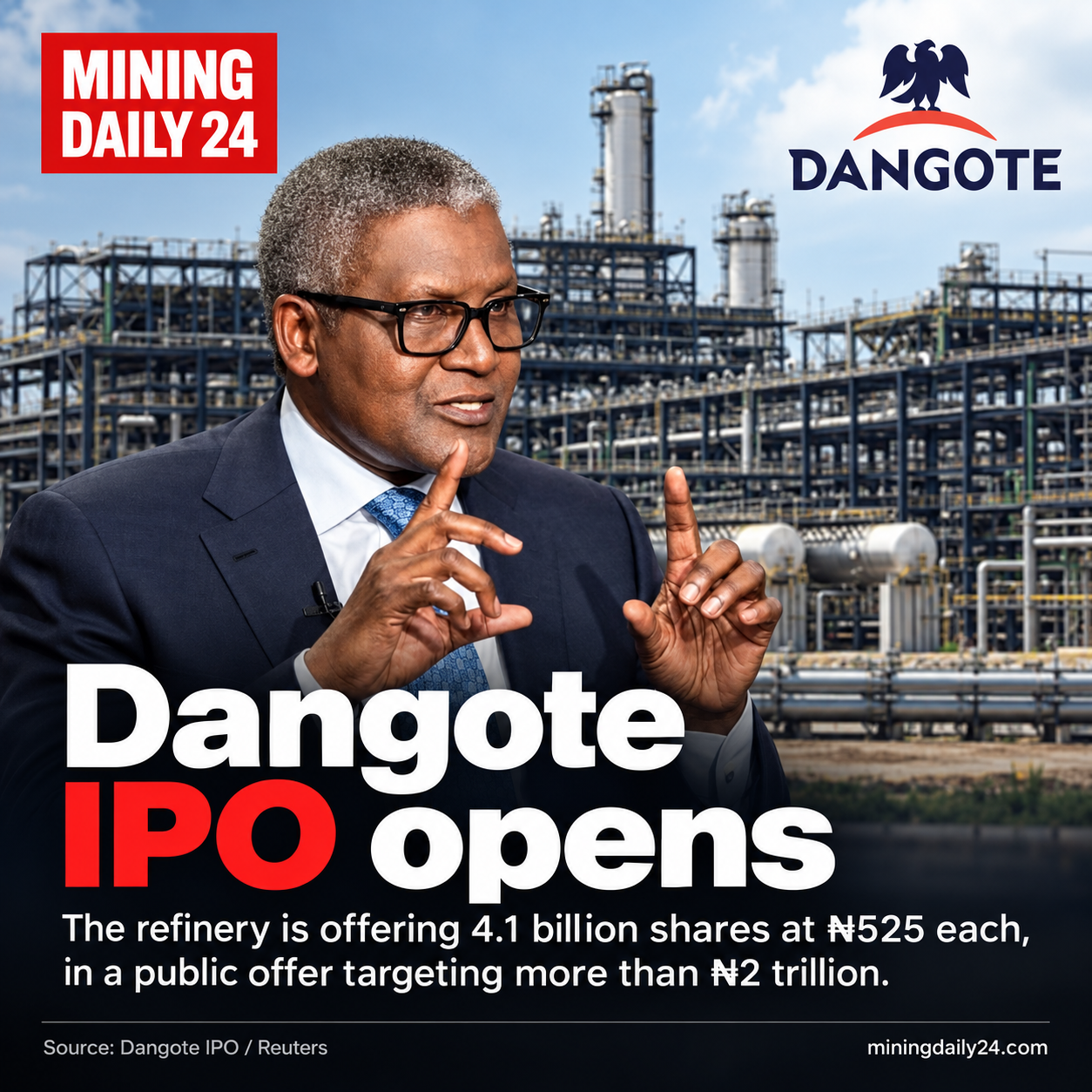
Dangote Petroleum Refinery has opened its initial public offering, giving investors access to one of Africa’s largest industrial assets in what is expected to become the continent’s biggest-ever public share sale.
The refinery is offering 4.1 billion ordinary shares at ₦525 each, targeting approximately ₦2.15 trillion, or about US$1.6 billion, from investors. The offer opened on 14 September and is scheduled to close on 13 October 2026.
Investors can subscribe for a minimum of 10 shares, representing an initial investment of ₦5,250. The shares are expected to begin trading on the Nigerian Exchange later this year.
The IPO comes as the Lagos-based refinery strengthens its position in African and international fuel markets. The facility currently has processing capacity of approximately 700,000 barrels per day, making it one of the largest single-train refineries in the world.
The IPO gives public investors direct access to one of Africa’s largest industrial assets.
Dangote plans to invest approximately US$14.3 billion to expand the refinery to 1.4 million barrels per day by 2029, potentially placing it among the world’s largest refining facilities.
The business has also benefited from tightening international fuel markets. Dangote Refinery recorded US$1.82 billion in net profit during the first half of 2026, on revenue exceeding US$13 billion, according to Reuters. The refinery has increased exports of products including jet fuel, diesel and gasoil to markets beyond Nigeria.
Since beginning operations, the refinery has helped reduce Nigeria’s dependence on imported refined petroleum products while creating additional export capacity for Africa’s largest oil-producing economy.
The public offering now opens another chapter for the project by allowing retail and institutional investors to take direct ownership in the refining business.
Beyond Dangote itself, the scale of the listing could also have wider implications for African capital markets by demonstrating the potential for major privately developed infrastructure assets to raise capital locally.