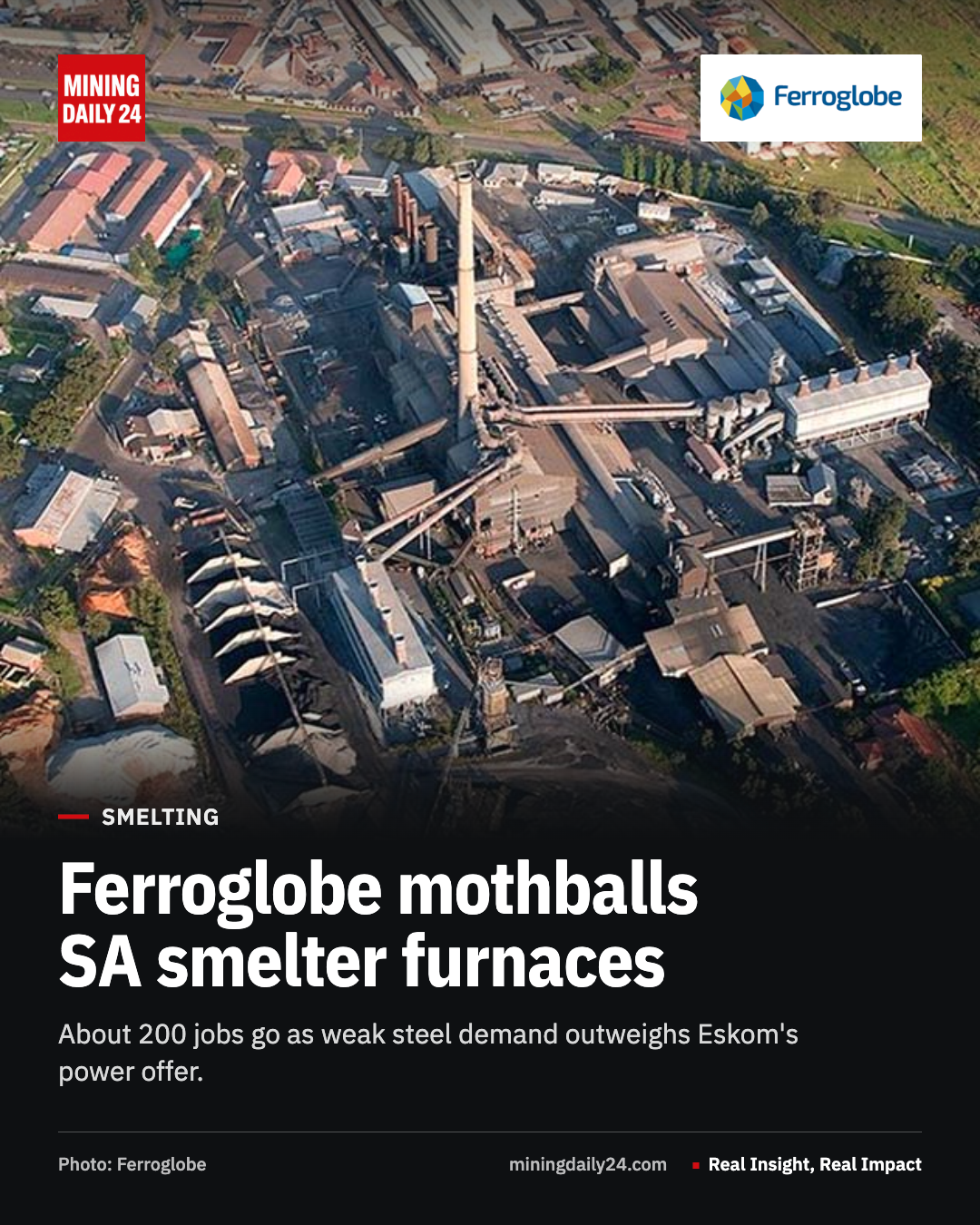
Ferroglobe will take its South African ferrosilicon and silicon metal furnaces out of commission, even after Eskom tabled a workable electricity tariff, because weak local steel demand makes a restart too risky, the company's South Africa leader told News24.
Nellis Bester said uncertain demand for steel and stainless steel would put the London-based group at "grave risk" under the take-or-pay structure attached to the offer. A take-or-pay agreement obliges the buyer to pay for an agreed volume of electricity whether or not its furnaces run.
Jobs and plants
The furnaces have been idle since the end of March. Ferroglobe said it has concluded a Section 189A retrenchment process that affects employees, contractors and service providers, as reported by Miningmx. Trade union Solidarity said about 200 jobs at the eMalahleni (Witbank) plant in Mpumalanga are affected immediately, out of up to 350 direct jobs that had been flagged as at risk earlier this year, according to Green Building Africa.
The eMalahleni smelter, formerly Rand Carbide, is about 100 years old. It stopped producing after the April electricity tariff increase of nearly 9%. Electricity made up more than half of production costs and the South African business had been loss-making for three years, Miningmx reported. Its Polokwane silicon smelter went back on care and maintenance in 2024 after a brief restart.
Ferroglobe said it would maintain the assets and keep assessing market and energy conditions. It is considering keeping electrode paste production and product research going in South Africa.
Power deal was not enough
The decision follows months of talks with Eskom. Earlier this year the utility gave tariff relief to large ferrochrome producers, but ferrosilicon and manganese alloy smelters remain under pressure from both power costs and a soft domestic steel market. Transalloys, the country's last manganese smelter, also in eMalahleni, warned in December 2025 that up to 600 jobs could go.
Solidarity said the Ferroglobe job losses were preventable. The union called on government to offer smelters and steelmakers competitive electricity tariffs and to impose import tariffs on Chinese steel and stainless steel products.
Why it matters
Ferrosilicon is a key input for steelmaking, and Ferroglobe's shutdown takes another beneficiation plant out of Mpumalanga's industrial base. The case shows that a cheaper power price on its own may not keep energy-intensive smelters running when take-or-pay terms meet weak local demand, a test for the government's plans to grow beneficiation of South African ores.